

More Theatre News
-

Review: Glorious! at the Belgrade
Posted on Wed 20 May
-
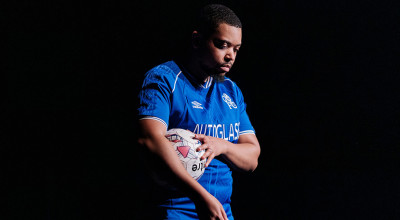
Six new shows to join Birmingham Rep's new youth festival Rep Rising
Posted on Tue 19 May
-
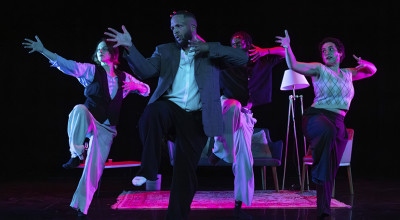
Birmingham’s newest theatre festival celebrates creative community
Posted on Tue 19 May

Birmingham-based composer and theatre maker Michael Wolters was working on a show for the 2022 Commonwealth Games in the city when he first discovered that lawn tennis was invented in Edgbaston.
Hearing that the now-international game was devised by Victorians Harry Gem and Augurio Perera, who were close friends and may have been lovers, Michael knew he’d stumbled across a tale worth telling.
So, along with fellow artistic director Alexandra Taylor, Michael researched the story and created the musical Fairlight, which was premiered in Birmingham last autumn and is this year undertaking its first UK tour - beginning at the city’s historic Edgbaston tennis courts.
Fairlight retells the story of the origins of lawn tennis through the lens of a queer love story. Coming complete with an electropop score, the show interweaves the past and present and includes interviews with current LGBTQ+ tennis professionals.
“I was amazed to learn that tennis was invented in Birmingham,” Michael recalls, “and that the oldest tennis club in the world is in Birmingham - at Edgbaston. And then we started doing the research and found that the house where Harry and Augurio played, Fairlight, still exists and still has the same name.”
Harry and Augurio were both married, and yet their friendship sparks speculation that they may have been lovers. Michael and Alex realised that the ambiguous nature of the men’s relationship gave them space to explore queer invisibility in sport - and specifically within the world of professional tennis.
“You don’t even think about whether tennis was invented by a straight man or a gay man or a straight couple or a gay couple - you don’t think about those things, but you automatically assume a straight background. The surprise is when it’s not. And it’s really fun to think about the fact that tennis as we know it today could have been invented by two gay lovers. What difference does that make? Does it change anything? Does it change anything to the game? Do you look at it differently? In the show, rather than us saying something, we are opening a lot of questions.”
For Alex, it’s the not knowing which gives the story its resonance: “When Michael told me about Harry and Augurio, I started looking into the history, expecting it to very quickly go ‘Okay, they weren’t really seeing each other,’ and what I found really interesting is that history relates no more than they were both married and one of them had kids. There is nothing in the history that suggests they were anything more than friends.
“However, once you’re looking at it through that modern queer lens, there’s nothing there that contradicts that reading, and a lot of things that kind of support it. We have no evidence either way, and historically people have assumed that people who appeared straight were straight, but once you start investigating the potential for it being something else, there’s a whole other reading you can put on the facts.”
Alex’s research also revealed more about the lives of gay men in Victorian England.
“We include information about Victorian prosecutions of gay men in the show because very often the only evidence that gay men existed in Victorian times was the evidence of them being arrested and prosecuted. The ones who weren’t caught didn’t exist.”
Once Michael and Alex had their story about gay invisibility in historical tennis, they then decided to explore the issue in terms of the sport today. The show features interviews with former professional tennis player and president of the US Tennis Association, Brian Vahaly, Pride In Tennis founder Ian Pearson-Brown, former doubles world number one Gigi Fernandez, five-time Paralympian Lucy Shuker and tennis journalist Nick McCarvel.
“The show also engages with the lack of out gay men in modern tennis,” says Alex. “It’s like, look, if you’re having a problem with us thinking about people in the past possibly being gay, what about all the people in the present?”
The production also brings together past and present by combining the structure of an operetta libretto written by Harry Gem with new music composed by Michael and inspired by the sounds of the Fairlight CMI (computer musical instrument). The famous 1980s sampler was used by a host of musicians, including Peter Gabriel, Stevie Wonder, Mike Oldfield and Kate Bush.
“Having been brought up in the 80s, this music is very dear to me,” says Michael. “And then there was this great coincidence of the house being called Fairlight. We couldn’t use the music from the original operetta because we didn’t have it, so we had to turn in a different direction and went with the idea of sampling and sample discs from the Fairlight.
“A lot of our sounds will be very recognisable. It’s not just the samples from the demo discs as used by Kate Bush and the Pet Shop Boys and Peter Gabriel and so on; we also sampled a lot of tennis sounds. So there’s a song that’s full of grunting, and we have ball sounds and umpire announcements.”
The show, which was devised with fellow composer Paul Norman, dramaturg Tanna Chamberlain and filmmaker Oli Clark, has been designed to take place on lawn tennis courts; the tour opens at Edgbaston Archery & Lawn Tennis Society as part of Flatpack Festival.
The production was staged in Edgbaston last year. The team had hoped the musical would be played on the outdoor courts at the club, but bad weather forced them to stage it indoors instead. Now they’re keeping their fingers crossed for mid-May.
“We all felt it was important to come back, because we haven’t done the full show at the Edgbaston club, which is where it was meant to be,” Alex explains. “We did a work-in-progress - a 20-minute version of the show - there in 2024, and we were meant to come back and do the full version in 2025, but the rain was terrible and we had to go indoors.
“There are so many reasons the venue is important for us. It’s partly because it’s the oldest tennis club in the world, partly because it’s the club that Harry and Augurio played at, and partly because it’s less than a mile from the house where they invented tennis. It’s also because Oli is club secretary and plays competitively as part of the club.”
Alex and Michael are looking forward to sharing Fairlight with new audiences.
“It’s a show which isn’t like a normal musical,” Alex says. “It talks about tennis [but] not how you usually talk about tennis. It doesn’t take place on a stage; it goes out on a tennis court, where we have to worry about the weather and sound. We’ve made our lives really difficult because of those factors, but that means the show has a questioning factor and it evokes reactions.”
And Michael continues: “I always hope with everything that the audience will respond in a multitude of ways. I don’t want to make something that everyone just cheers about. I would really like it if there was some awareness after this show. We can tell from experience now that people have got it - they say ‘I didn’t know that tennis was invented here, I didn’t know that it was that terrible in the Victorian era, I didn’t know this or that.’ So that comes through, definitely. But also we want people to have a good time.
That’s why we chose the format of the musical, to contrast these harsh realities of the past and the present with some good tunes. It could have been a super-tragic opera, but I think the contrast here is interesting and will give audiences lots to think about.”
Fairlight shows at Edgbaston Archery & Lawn Tennis Society on Wednesday 13 May and then at Leamington Tennis Club, Leamington Spa, on Saturday 11 July.