
More Days Out News
-

Plans submitted to open Museum of Illusions in Birmingham
Posted on Wed 23 Sep
-
Feature: Cooking Up A Laugh
Posted on Wed 23 Sep
-
Gloucestershire’s most dazzling light trail returns with an enchanting new theme
Posted on Wed 23 Sep

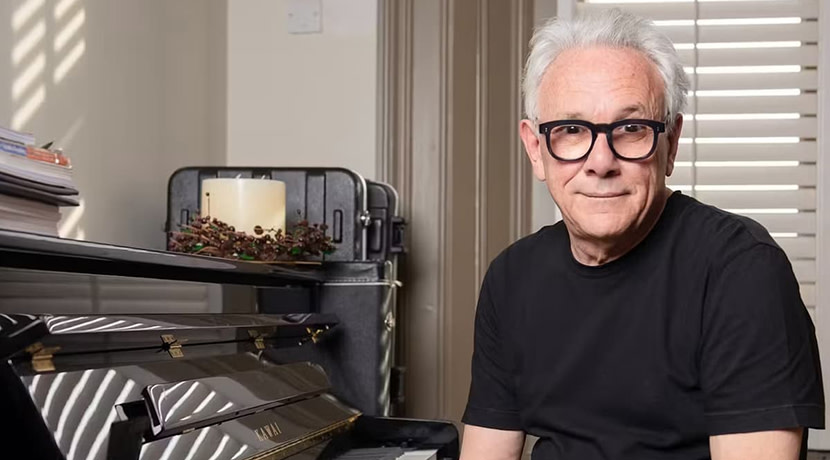
Musician, songwriter & producer Trevor Horn has often been credited with creating the sound of the 1980s, having worked with an array of stars who dominated the pop charts throughout the decade. His upcoming live shows recreate some of those best-known hits and take him back to where he began (as “a bass player who sang a bit”) - as he explains to What’s On...
Dubbed ‘the man who invented the 80s’, songwriter and super-producer Trevor Horn has had his finger in an awful lot of musical pies. And it’s a finger which most certainly has a magic touch when it comes to creating chart hits. His first band, Buggles, went to number one with their first single, 1979’s Video Killed The Radio Star, and the artists and songs he subsequently worked with made him a constant presence in the pop charts for many a year afterwards.
The list of acts for whom he created hits is effectively a roll-call of some of pop music’s biggest stars: ABC, Frankie Goes To Hollywood, Grace Jones, Pet Shop Boys, Robbie Williams, Tina Turner, Lisa Stansfield, Malcolm McLaren, Seal, Cher, t.A.T.u., Dollar and Boyzone...
...And that’s not to mention Marc Almond, Rick Astley, Rumer, All Saints, Tori Amos, Simple Minds, Lol Creme of 10cc and Steve Hogarth of Marillion, who have all appeared on his albums of cover versions in recent years.
At the tender age of 77, he’s now touring and playing some of those iconic songs again, and doing so with an evolving band that includes Creme as well as guest singers such as Seal and Hogarth. The only constant is that every tune they perform was a chart topper and has a Horn connection - whether he wrote, produced or played on the original, or released a cover version of his own.
“All the songs we play were number-one records, so that gives us a pretty formidable repertoire,” he says.
“These songs mean a lot to people, and we play them with precision and authenticity.”
Playing with precision is key for notorious perfectionist Trevor. It’s also one of the reasons his backing band extends to “seven, eight musicians”, he says.
“I’ve never really made much money because I have too many people!” he laughs. “I have an old-fashioned view of things - I like to play the tracks… really play them. And to play pop records properly, you need two keyboard players, two guitar players and so on.
“There are very few pop records that don’t have overdubs on them - even The Beatles records that we all loved had keyboard overdubs.”
But if recreating the sound of songs like Relax, Slave To The Rhythm, All The Things She Said or Kiss From A Rose seems like a relatively serious undertaking, the effect is the opposite, with audiences enjoying the chance to relive their youth - or hear the tunes for the first time - while having a dance.
It’s all part of the joy of performing live, says Trevor: “It’s fun, and there’s something real about it - you get to see people and you’re out there. In the studio, you’re on your own, sat on your backside.”
The tour is also something of a full-circle moment for Trevor, as he spent much of his 20s as a gigging musician. He started out playing double bass as a child, the same instrument as his father.
“The problem was no one ever gave me any lessons, and to be any good at double bass, you really have to have lessons,” he says, adding that he followed his dad by switching to bass guitar “because it’s a bit easier and a lot easier to carry around”.
Having turned pro at the age of 18, he “made quite a good living” playing bass guitar until he was 30, largely because he could sight-read music. But everything changed the first time he set foot in a recording studio.
“The minute I went in I knew that was what I was really interested in,” he says.
It wasn’t long before production became his primary focus. The first major breakthrough came when he formed Buggles with keyboardist Geoff Downes. The two had met while playing in the backing band for Horn’s then girlfriend Tina Charles, best known for I Love To Love, yet another UK chart topper.
Video Killed The Radio Star’s instant success made Horn and Downes hot property, and saw them recruited into prog rock band Yes.
Despite a well-received album (Drama), the move was hardly a successful one and the pair left after only a year. Horn almost instantly transitioned to production work - a move he credits to his manager, Jill Sinclair, who also happened to be his wife.
“She was a terrific manager because she understood what I was good at, and she chose all the things I did. I’d been producing demos and various things for about four years, so by the time I got some success, I knew what I was doing.”
That success kicked off with pop duo Dollar, Trevor producing their third album as well as co-writing a number of hit singles. Those “first techno pop records” effectively became his calling card and led to him producing ABC’s debut album, The Lexicon Of Love, (its hits included Poison Arrow and The Look Of Love), effectively kicking Trevor’s career into overdrive. He went on to work with Malcolm McLaren (Buffalo Gals) and the Art Of Noise before returning to the reformed Yes, but this time purely as producer (“what I should have done in the first place”).
“When I heard Owner Of A Lonely Heart, I thought, you know what, we might be able to get them a hit single.”
He was right - the tune went to number one in America and the album 90125 became the band’s biggest-selling LP. When pushed, he’ll admit the song is probably the finest he’s worked on (“the best technical record I ever made”), but his favourite artist to work alongside is Seal, who he made six albums with (“we got on and worked together really well”).
Things were a little more awkward with Frankie Goes To Hollywood, the first band to sign to ZTT, the label Trevor co-founded with journalist Paul Morley. The band’s first three singles all topped the charts, but making the records was far from plain sailing for the purist producer.
“The Frankies were really interesting people, but they’d only ever done five shows in their life. They learned fast, and after a year they were pretty good - [but] to be honest, if they hadn’t been signed to my record label, I would probably have walked away because it looked like it was going to be too difficult.”
Performing their songs live is rather easier; Trevor loves playing the pumping bass lines of Relax and Two Tribes on his five-string guitar - and the producer says he’s revelling in the chance to be a musician again.
“It’s how I started out - I was a bass player and I sang a bit. I just ended up spending 40-odd years in the recording studio. It’s nice to get back out on the road and play to people again.”
Trevor Horn & His Band play The Assembly, Leamington Spa, on Thursday 3 December and O2 Academy, Birmingham, on Wednesday 16 December
By Steve Adams