

More Theatre News
-
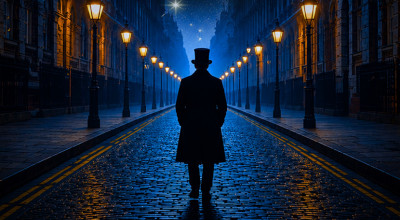
A Christmas Carol announced as BOA's Christmas show
Posted on Fri 22 May
-

Feature: Kid Stuff
Posted on Thu 21 May
-

Feature: Dream On
Posted on Thu 21 May

The Boy Who Harnessed the Wind joyfully documents the story of teenage William Kamkwamba (Alistair Nwachukwu) as he follows his dream to bring power to his community, in the form of a home-engineered windmill. With innovative storytelling, stunning musical moments, and impressive performances from the whole company, the play brings to life a real story of imagination and achievement.
William, a schoolboy in the Malawi town of Wimbe, loves to discover how things work - he's held spellbound by the dynamo light on his teacher's bike, and commissioned by the principal to mend a broken radio. Representing the potential energy that could bring his community into the future, he is surrounded by a darker narrative - the crops have failed thanks to deforestation, and the government has exported so much home-grown grain that the community is starving.
William's father Trywell (Sifiso Mazibuko) is a farmer, and while his mother Agnes (Madeline Appiah) and sister Annie (Tsemaye Bob-Egbe) encourage William's intelligence and potential, Trywell refuses to gamble on new technology as the food crisis mounts. Unable to pay for school, William can't suppress his inventive streak - bolstered by his lighthearted best friend Gilbert, played by Idriss Kargbo, whose performance is much more than simply comic relief.
The greatest success of the production is its strong ensemble feeling. The company fills the stage of the Royal Shakespeare Company's Swan Theatre with music and movement - the choreography by Shelley Maxwell is particularly impressive. Through the cast's stage presence, a local market is conjured up without the need for complex set pieces, and a school room overlays seamlessly with toiling farmers in the field.
In addition, the whole cast sings extremely well. There are times when the music, written by Tim Sutton, strays into the territory of 'trad Musical Theatre', which is perhaps less memorable, but when the company joins voices in effervescent harmony, the effect is truly magical.
The play employs an engaging ‘storytelling’ style - led by Chief Wimbe (McCallam Connell) and Edith Sikelo, the school librarian (Helena Pipe). As old folklore blends with facts, we see William become a living legend. The sinister local mythology of hyenas (represented on stage by the physically imposing Shaka Kalokoh) is neatly drawn in parallel with the outsiders exploiting the community for personal gain.
The final ingredient in William's legend is the Wind of the title, mischievously personified by Choolwe Laina Muntanga, who offers soaring vocals and a charismatic stage presence created without any spoken lines.
In all, The Boy Who Harnessed the Wind is an uplifting tale told by a universally talented company, who balance with skill moments of tragedy and comedy. It’s a night at the theatre like no other - last night's audience were on their feet in seconds of the final triumphant number.
Five Stars
The Boy Who Harnessed the Wind was reviewed on Thursday 19 February by Jessica Clixby at the Royal Shakespeare Company’s Swan Theatre, where it shows until Saturday 28 March