
More Music News
-
Birmingham hosts major black arts showcase in celebration of Black History Month
Posted on Tue 01 Sep
-
Feature: Gloriously Graceful
Posted on Thu 20 Aug
-

New arts programme to celebrate Smethwick’s stories, heritage and community spirit
Posted on Mon 03 Aug

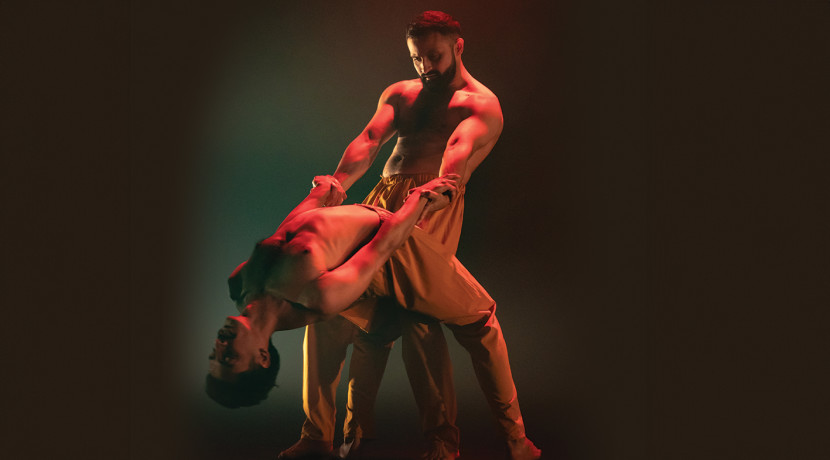
Founded in Wolverhampton in 2006, Jaivant Patel Company is celebrating 20 years of South Asian Arts and Heritage in the Black Country. The Midlands-based institution creates contemporary productions influenced by a myriad of South Asian Dance forms, and is leading the way in amplifying LGBTQ+ South Asian voices - exploring the intersections of race, gender, sexuality, faith, and spirituality. Dancer, choreographer and the company’s founder and artistic & creative director, Jaivant Patel, sat down with What’s On to look back on two decades of dance in the Midlands…
Jaivant Patel, your Wolverhampton-based arts company has helped to express your experience as a member of the South Asian and LGBTQ+ communities for 20 years. How did it all begin?
It was all born out of underrepresentation. It was born out of a lack of seeing people like me, from Wolverhampton, with the same characteristics as me - I wanted to pull some of that back into a city that I love. I trained at the Northern School of Contemporary Dance and came back to Wolverhampton in 2004. On a whim, I applied to the Arts Council for some funding. I purposefully came back to Wolverhampton, because everybody was swanning off to London and the North East - Newcastle in particular was really growing in terms of the British dance scene. I didn't want to go to those spaces and places; I wanted to come back home. I applied for this funding and suddenly this whole new world just opened up for me.
You and the company have got deep roots in Wolverhampton, but how do you make and maintain connections with other organisations?
I think what Jaivant Patel Company has always been good at is visibility. We've always been visible, and I'm not just talking about being visible regionally. I'm talking about the visibility that we have nationally - and in many cases, internationally as well. From our little base here in Wolverhampton and at the Art Gallery, we keep on having conversation and dialogue that matters.
For the last three years, we have been running a seed commission called Samānatā for South Asian Queer performance. It is currently the only seed commission available for performance for South Asian Queer creatives. And that's running in partnership with Bradford Arts Centre, formerly known as Kala Sangam. We've had a relationship with them since 2017. It just made sense that we maximised what our relationship meant, so that the North and the Midlands had a share of what that development for artists could look like. In our 20th year, we are bringing on South East Dance with that collaboration as well.
I think it's safe to say that Jaivant Patel Company is the only UK-based company specifically making work around the South Asian Queer experience. Nobody else has done that to this level. Within Western contexts, that might not be groundbreaking or innovative. Within a South Asian perspective, it absolutely is groundbreaking.
What projects is the company working on at the moment?
We have professional touring work, which is fundamentally engaged towards amplifying South Asian LGBTQ+ voices and narratives. We have community engagement work, which is a series of workshops, classes and events for the community - platforms where we showcase emerging community groups within professional settings. Then we have our heritage arm, which really looks more closely at the development of the South Asian community within these areas - and the ability to keep their heritage and their histories alive, as a documentation for future generations. We would define ourselves as ‘a South Asian arts & heritage organisation with a focus on dance’.
The 20th year will also involve the London premiere of our current work, Astitva, and the development of another piece of work that we're making for unconventional spaces, which is called a Hridyam. And we're also going to be thinking about how we make those two works accessible and how we may look at a piece of work in retrospect. We're also taking the time to reflect and think about how we adapt; the sector is changing, and the cultural landscape is changing more now than ever.
What projects and achievements are you particulary proud of from the last 20 years?
I'm really proud of Astitva. I'm really proud of what we managed to do with that production because it breaks so many stereotypes and so many norms. It challenges what the South Asian body is in dance. It challenges what contemporary dance is and what we mean by that, and it also brings to the forefront what British South Asian identity means. I think what's been great about this is the ability for it to speak to audiences that go beyond an arts world.
It's even greater to see members of the South Asian community coming out to see the work - because of curiosity, because of dialogue, or because they might be connected with somebody who's from the [LGBTQ+] community. Or they might be a member of the community themselves. I remember in 2024 when we took Waltzing The Blue Gods to The Place - the home of contemporary dance in London - the majority of the audience which attended that performance in London were from the South Asian Queer community and had never set foot inside The Place [before]. It's great to see how the doors have been opened to this community.
After two decades you are well established in the city - do you put that down to your loyal audiences in Wolverhampton?
We've been very lucky that we've managed to break [into] the audiences of Wolverhampton - they support us. That's by no means a small task, when you think about the lack of infrastructure that exists in Black Country towns - there is very little investment that comes in from funding bodies, for example, versus somewhere like Birmingham, which has got a massive infrastructure and a lot of investment. Now, that's not to say the funding bodies are at fault, but if the infrastructure doesn’t exist, then people aren't creating work to the same level or the same frequency as other big cities which already have that infrastructure.
I'm really happy that we're known for what we do in the city. We are respected. There's a connectedness, but also that connection has grown to wherever we go outside Wolverhampton on tour, because people speak to people - especially when you come from a diaspora that has a history of migration, right? There is a connection that's everywhere across the whole world. So it's great that the word spreads. I always love it when people come [to see us] on the recommendation of someone else who's seen the work.
Where would you like Jaivant Patel Company to be in another 20 years?
I want to be still running! I want to have grown - I would love a space for dancing in Wolverhampton, a space for dance, a space for us to further embed what we do, and the ability to create mid-scale and large-scale work as well.
For more information about Jaivant Patel Company, and to find out about their upcoming performances, visit their website at jaivantpatelcompany.com
By Jessica Clixby
Photo credit: Karol Wyszynski