

More Theatre News
-
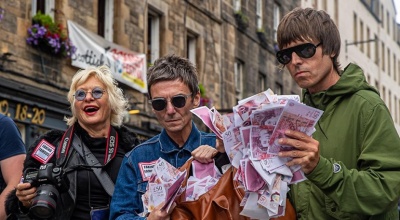
Celebrity lookalikes wanted to star in show at Lichfield Garrick
Posted on Fri 06 Mar
-

Motherland star Jackie Clune plays The Narrator in The Rocky Horror Show
Posted on Thu 05 Mar
-
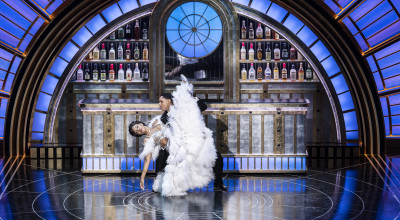
Review: Top Hat at Birmingham Hippodrome
Posted on Wed 04 Mar

A brand-new comedy, about how the race for a number-one single gripped an entire nation, premieres at The Rep in Birmingham in February. Writer John Niven explains how The Battle between Blur and Oasis made national news in the summer of 1995, and why it’s worth revisiting in 2026...
The first must-see play of 2026 has its roots in the gloriously hot summer of 1995, when the main item on the British media’s agenda - other than ways to avoid overexposure to the blazing sunshine - was the red-hot race for number one between Blur and Oasis.
The hugely popular bands and their fans had developed (some might say manufactured) a rivalry that somehow encompassed the north-south divide as well as working versus middle class. That rivalry only intensified when they released new singles on exactly the same day.
The race between Country House and Roll With It (spoiler alert: the former came out on top) was fuelled by management and marketing teams as much as the bands themselves. This is a key premise of The Battle, a brand-new comedy ‘based (mostly) on real events’ by award-winning author John Niven (pictured).
Best known for Kill Your Friends, a hilarious music-industry satire set at the height of Britpop (he worked for record label Independiente at the time, and famously passed on the chance to sign Coldplay), the Scottish author was initially reticent about writing a play when producer Simon Friend first approached him about doing so.
“I wondered if he was after a Britpop musical, and that’s not really what I do,” John explains in a glorious central Scottish brogue barely dented by years of living south of the border. “Then I thought there might be a really funny comedy, a sort of David Mamet piece, of men screaming at each other in rooms about something which, when you pull the camera back, is really ridiculous - two pop records; who cares?
“I thought if we could invest it with the sort of drama of the Cuban missile crisis, it could be really funny.”
The seed sown, John dived into research, as well as his own recollections of the industry at the time, and was instantly reminded that the feuding bands had actually started off as comrades in arms.
“I was there in February 1995, and I remember Damon Albarn holding up the Brit Award for Best British Group and saying it should be shared with Oasis, with much love and respect to them. I also found an interview with Noel Gallagher from the same night where he said: ‘It’s us and Blur against the world now.’ But then in August, you have Noel saying he wanted them to get AIDS and die - that’s quite a dramatic arc in the course of five months! How do you get from one to the other? It was quite fun unpicking how it happened.”
That fun is what fuels the play, which is John’s first. He’s penned a number of novels and screenplays, but admits he found writing for the stage a huge learning curve.
“If you’re writing a movie, you can just put ‘cut to Central Park’ or whatever, and you don’t have to care because it’s somebody else’s job to hire the camels, train the camels and so on. You can’t do that in the theatre. You’re much more limited - not in your imagination or what the characters can say, but in terms of where you can go. The 10/12-minute scenes felt very long to me, and it took a bit of getting used to.”
Fortunately he had great characters to write about, not least the Gallagher brothers, who he describes as an absolute gift.
“Liam Gallagher is just a joy to write, because you can have him say something pretty crazy and then go online and within a minute find five interviews where he’s said something 10 times crazier. His brain works in quite an odd way in terms of whether he’s going for metaphors or similes, and that’s a gift for a writer.
“Noel talks like a stand-up comedian - his speech is very structured and precise, his timing’s impeccable, and he knows how to land a gag. He’s great with understatement and exaggeration, and that’s fun to write in a different way, whereas Liam’s much more unscripted and untutored - you almost can’t guess where he’s gonna go.”
John says putting members of the bands at the heart of the play was never his original intention - the first draft was more about record-company executives and the machinations of the industry - but once he started to do so, he really began to enjoy the process.
“As I went through the drafts, it became less and less about the record-company people. Alan McGee’s in it, the Creation Records boss who signed Oasis, and Andy Ross, the A&R guy who signed Blur, because the bands have to receive news of what’s happening, so we needed a conduit to do that.
“But as soon as I started writing it by jumping between the two band’s camps, it became much more fun.”
The play’s release misses out on the 30th anniversary of the chart race by a year, but the overwhelming response to the Oasis reunion shows, and the potential for more gigs this year (at the time of writing, a glorious return to Knebworth is rumoured), will undoubtedly fuel interest in the show - another gift, given that Liam and Noel’s reconciliation was never even on the cards when The Battle was written.
“By the time we open in February, hopefully Knebworth shows will very much be on the horizon. But I don’t think interest in Oasis is going anywhere, is it? I went to the show in Edinburgh with Irvine Welsh, and to see 80,000 people singing every word to every song was just unreal. I like both bands, but I couldn’t explain to you why Oasis’ music has tattooed itself into the DNA of British people in a way that no other band bar The Beatles has done.
“In the play, there’s a line from Justine Frischmann [Elastica singer and one-time girlfriend of Albarn], who makes the point that Damon writes about British people very brilliantly and perceptively, but Noel writes for them. He articulates yearnings and feelings that they don’t quite know they have in a non-specific way - and there’s something hugely appealing to a lot of people about that.”
Judging by the audience demographic at the Oasis reunion shows, that includes younger admirers potentially oblivious to a 30-year-old feud which took place before they were even born.
“Yeah, absolutely. It’s funny with the new-generation fans - they kinda know there was some historical gangland beef between the two tribes, but not how it started, what it was about or how it ended. That’s all great for us!”
The Battle shows at The Rep, Birmingham, from Wednesday 11 February to Saturday 7 March
By Steve Adams