
More Days Out News
-

Tumble down the rabbit hole at Weston Park this Easter
Posted on Thu 26 Mar
-
Big plans revealed for Spode Works
Posted on Wed 25 Mar
-
Digbeth Dining Summer Tour returns to the Midlands in 2026
Posted on Tue 24 Mar

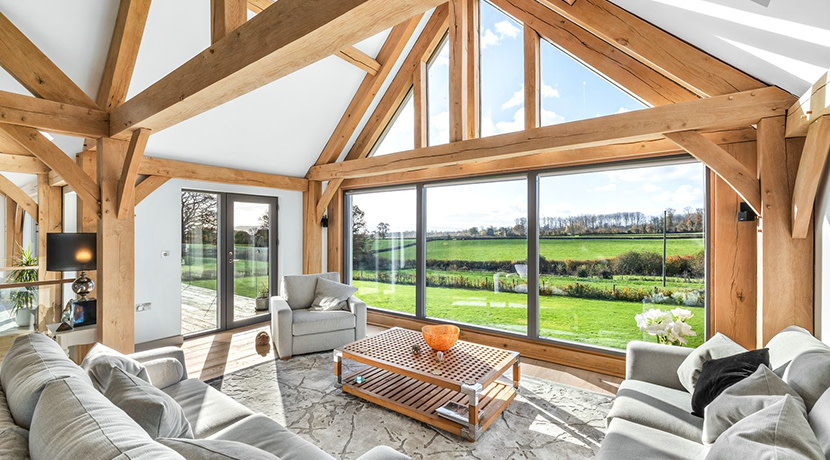
Bespoke design is too often dismissed as a luxury indulgence, when in reality, it is a strategic tool that can protect both budget and long-term value when handled correctly.
Helen Needham, head of architecture at Oakwrights, a Midlands-based company exhibiting at the Homebuilding & Renovating Show, brings professional insight to the debate, separating perception from practical reality.
Get 2 FREE tickets to the show, which takes place from 19-22 March at NEC Birmingham.
Drawing on her experience leading in-house and regional design teams, Helen explains where bespoke design genuinely adds value, where standardisation works in a homeowner’s favour, and how early collaboration protects both design intent and budget. The result is a grounded, experience-led perspective for homeowners seeking clarity before embarking on a project.
There’s a long-standing perception that anything bespoke must be more expensive, largely because it’s associated with one-off materials, specialist craftsmanship, or complex detailing. In reality, bespoke design doesn’t have to mean designing everything from scratch – it’s about making informed decisions that respond to how someone wants to live and the site context. Often, the fear of overspending comes from not understanding where personalisation adds meaningful value, and where it can be achieved by working with standard components, proportions, and layouts rather than through costly customisation.
The bespoke elements that tend to deliver the greatest return are those that improve how a home feels and functions day to day, such as spatial flow, ceiling heights, natural light, and views. Tailoring the layout to suit lifestyle needs, incorporating well-considered storage, or framing key outlooks can significantly enhance quality of life, without necessarily increasing build costs. These kinds of design decisions also tend to appeal to future buyers, meaning they often support long-term value as well as immediate enjoyment. Adaptable spaces are also great, so for example being able to adapt a ground floor study to a bedroom is a great asset.
Features such as good natural daylight, strong connections between indoor and outdoor spaces, and flexible, multi-use rooms consistently perform well from both a lifestyle and re-sale perspective. Open-plan kitchen, dining, living areas, considered home-working spaces, and energy-efficient design measures and their associated plant rooms, are all highly sought after. When these are integrated thoughtfully into the overall design rather than added retrospectively, they improve everyday comfort while also making a home more attractive on the open market.
A well-designed layout can often make a home feel larger than its actual footprint. By eliminating redundant circulation space, aligning functional areas, and using open sightlines to extend perceived depth, it’s possible to create more usable space without increasing floor area.
Multi-functional rooms, built-in storage, and carefully positioned glazing can all help maximise the efficiency of a plan, reducing the need, and cost, of building additional square metres.
We often see budgets stretched unnecessarily through over-specifying finishes, glazing systems, or mechanical solutions without a clear benefit to performance or lifestyle. For example, large areas of high spec glazing where orientation hasn’t been considered can increase both upfront costs and long-term overheating risks, so we design to ensure this is considered. Similarly, opting for complex structural solutions or premium materials in areas that aren’t visually prominent may not offer proportional value in return.
Elements such as window and door sizes, oak bays, porches, and dormers can often be aligned with standard manufacturing dimensions without compromising on the overall design intent. Designing with these parameters in mind from the outset can reduce fabrication costs and lead times, allowing the budget to be focused on areas that genuinely benefit from bespoke treatment. Design becomes unnecessarily expensive when uniqueness is driven by form rather than function.
Irregular geometries, complex junctions, or non-standard construction details can
introduce additional design time, specialist labour, and material waste without significantly
improving how the home performs or feels. True design value comes from thoughtful responses to
site, light, and lifestyle – not simply from creating something visually different.
If working to a fixed budget, investment should first be directed toward the fundamentals: layout, building fabric, insulation, and energy performance. These are the elements that are difficult or impossible to change later and have the greatest impact on comfort and running costs. Natural light, storage, services, and good spatial planning should also be prioritised. Finishes and fittings, by contrast, can often be upgraded over time as budgets allow.
Early collaboration between the homeowner, architectural designer, and wider design team helps ensure that design ambition and budget are aligned from the outset. Engaging with consultants and suppliers early in the process allows potential constraints or cost implications to be identified before they become embedded in the design. This proactive approach reduces the likelihood of late-stage redesigns or substitutions, which can be both costly and disruptive once construction is underway.
National Homebuilding & Renovating Show returns to NEC Birmingham on 19-22 March. Get your 2 FREE tickets worth £36*. Simply visit homebuildingshow.co.uk/midlands enter your details and we look forward to seeing you there.
*Ticket offer expires 3pm 18 March 2026. Saving based on one-day full-price ticket for two people. Children under 16 go free.