
Good Golly Miss Molly
Until Sat 2 May
View Venues, Dates & Times
You may also like...
-
Peter Pan
J M Barrie’s much loved children’s story
-
2:22 - A Ghost Story
Starring James Bye, Natalie Casey, Grant Kilburn and Shvorne Marks.
-
Sweeney Todd The Demon Barber Of Fleet Street
A razor-sharp story of retribution

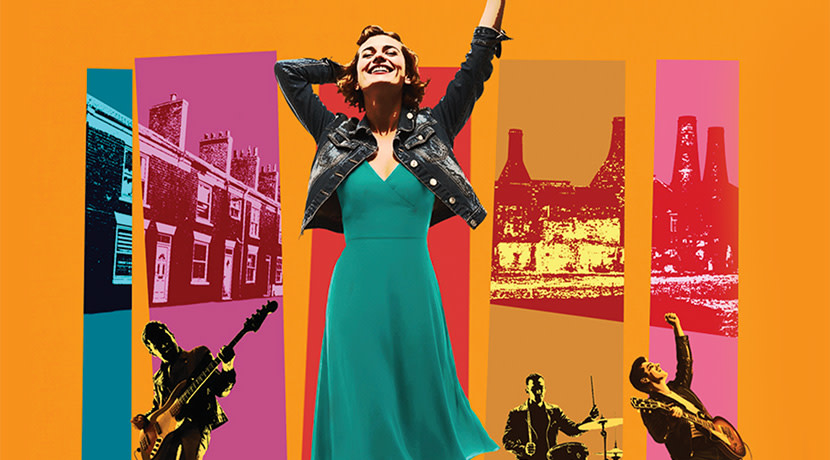
At the frontline of a community fighting for survival, their vibrant street faces demolition. But Molly Gordon and her band of neighbours are refusing to go quietly. Gathered together in the local workingmen’s club, Molly’s even managed to reunite her former rock ‘n’ roll band, Ronnie Angel and The Devils.
As the fate of their homes is decided, the residents of Victoria Street relive the community’s past, and the triumphs and tragedies of their daily lives. But is there a future for their street?
Pulsing with energy, nostalgia and a foot-stomping soundtrack of rock ‘n’ roll hits from an era gone by, Good Golly Miss Molly charts the history of one local community against a backdrop of social turmoil, societal changes and tumultuous friendships. A story of defiance, solidarity and unbreakable community spirit in the face of adversity, this feel-good show is as relevant as ever.
New Vic Theatre, Newcastle-under-Lyme
Telling a story inspired by the social history of Stoke-on-Trent, pioneering musical Good Golly Miss Molly comes home to the New Vic this month, nearly 40 years after its premiere at the theatre.
The play is written by Bob Eaton, who also returns to the director’s chair to revive the production, which features a cast of 10 actor-musicians playing foot-stomping rock & roll. What’s On caught up with Bob to find out more about both the history of the show and the 2026 revival…
Billed as ‘a powerful, music-fuelled, feel-good drama’, Good Golly Miss Molly follows a community who choose to fight back when their street faces demolition - while in the process, the titular Molly Gordon reforms her old rock & roll band, Ronnie Angel And The Devils.
The play was originally written and directed by Bob Eaton, who returns to the helm as the production is revived in celebration of the New Vic’s 40th anniversary. Bob’s own story is closely linked to the theatre - and the tale of Miss Molly herself...
“My history goes right back to the old Victoria Theatre,” says Bob. “I joined as assistant to [artistic director] Peter Cheeseman in 1971 - that was my first job. I spent three years working with Peter. One of his specialities was the local ‘documentary’. [Peter] used music, but it was always folk music - often using local stories and the words of local people.”
Bob took a leaf out of Peter’s book when he was appointed artistic director of the Everyman Theatre in Liverpool, producing Lennon - a groundbreaking play exploring the legacy of John Lennon, who had been murdered the previous year [1980].
“You’re dealing with real people’s lives, real people’s memories,” explains Bob. “So I did a Cheeseman on it; I went and interviewed as many people as I could and built the show out of those memories - and of course the songs of John Lennon.”
Two years after the New Vic opened (in 1986), Bob returned to work with Peter, who encouraged him to create another documentary-style play, inspired by the residents of Stoke-on-Trent.
“I was looking around for a possible local story, and I came upon the residents of the Hawes Street area in Tunstall. They’d formed a residents’ association and were fighting the council, who wanted to demolish their houses. I went into the working men’s club, which was kind of the headquarters of the residents’ association, and it took me right back to my teenage years when I used to play in a rock & roll band - or ‘rhythm group’ as we called them back in the mid-60s - in a place just exactly like that: a working men’s club in Darley Dale in Derbyshire. It suddenly occurred to me that I could tell a story similar to the Hawes Street story, but it would kind of be my story as well - my story of growing up with rock & roll. Rather than write myself in, as it were, I would imagine a young woman the same age as me growing up in an area like Tunstall somewhere in the Potteries - it suddenly all came together.”
While it harks back to the 1960s, Good Golly Miss Molly was written and set at the end of the 1980s - reflecting the political landscape of the era. Nearly 40 years later, the revived production will transport audiences back in time to a previous generation.
“It’s like a retrospective of a retrospective! Liz Evans has been the designer at the New Vic ever since we first did Good Golly Miss Molly. It was the first show she worked on, as an assistant, so you could say she knows the show! She gets it completely. She’s been able to make it very clear through the design that we are in a club that’s been around for a few years - we’re in 1989, but it’s a club that’s had a life. All the sticky carpets!”
Speaking of reunions, also joining the company is Richard Hague, who played the leader of Molly’s band, Ronnie Angel, in the original production.
“That character goes from the age of mid-teens to late 20s/early 30s. Richard was the right age to do it then, but he’s a bit old for that part now! He’s playing Molly’s grandad… He kind of brings the seal of authenticity to it - he’s such a lovely chap.”
The company is comprised of actor-musicians - now a common sight in theatre productions, but a brand-new concept back in the 1980s.
“Lennon, the show I was talking about, was actually the first actor-musician theatre show ever, anywhere in the world. The generation of actors who grew up with me, a lot of them, like me, played in groups in their teenage years - so suddenly I was in a situation where I could use actor-musicians.”
Featuring actors who can provide their own musical soundtrack makes for particularly immersive storytelling, especially in a production like Good Golly Miss Molly, where rock & roll takes centre stage. But it wasn’t always plain sailing…
“In the first few shows I did with actor-musicians, it was chaos! Everyone was plonking on their guitars all the time. I used to get so frazzled! I used to finish up shouting ‘No plonking!’ What’s happened in the years since then is that a way of working has developed where there’s this whole discipline now. Everybody understands what the game is, and everybody knows when to be quiet, when to concentrate and when to let off steam.”
Returning to the New Vic for its ruby anniversary, Bob also revisits a directing style dictated by the theatre’s auditorium - performances are presented ‘in the round’, with the audience encircling the action.
“I started at the old Victoria Theatre, so my first 10 to 15 years were 90% directing in the round - it’s automatic to me. It’s great, though - you learn something all the time. What I’m very keen on these days is something we started off with in the first production of Good Golly Miss Molly: the front row of the audience are seated at pub tables, like cabaret seating. It’s very easy for them to get up and dance, and for members of the company to sit at the table with them, so there’s a blurred line between the audience and the action.”
Good Golly Miss Molly proved a huge hit with audiences, prompting the production to be revived at the New Vic twice in the early 90s, before being transferred to London’s West End. As the latest revival of this iconic Stoke production draws nearer, Bob is looking forward to the many reunions which will take place during the run - but most of all, to the brand-new memories that will be made.
“Richard Hague has managed to contact a load of people who were actually in the show in various productions at the New Vic. So we’ve got a great crowd of people coming who have been in the show over the years, as well as the audience members who remember it… But there’s a lot of people, of course, who know absolutely nothing of it, which is really exciting!”
Good Golly Miss Molly shows at the New Vic Theatre, Newcastle-under-Lyme, from Saturday 4 April to Saturday 2 May.
By Jessica Clixby
on Mon, 23 Mar 2026