
More General News
-

New Trustee and Governor announced at RSC
Posted on Mon 13 Apr
-
Wear it Red raises lifesaving boost for Midlands Air Ambulance Charity
Posted on Mon 13 Apr
-
Local journalist puts fresh spin on the day job with new live radio show
Posted on Thu 09 Apr

Three artists are currently in residence at schools across Coventry and Warwickshire – Keresley Grange Primary School; Camp Hill Primary School; and Coundon Court School – as part of Pangaea Sculptors’ Centre ‘s pilot programme ‘A 3D – 5D Learning Revolution: Sculpture as a Tool for Wider Learning’.
Funded by Innovate UK and delivered in collaboration with The Futures Trust, the 3D–5D programme takes pupils on a complete creative journey: from research and design through to the development of a site-specific sculptural artwork for their school or immediate environment. The residences run until 26 February 2026.
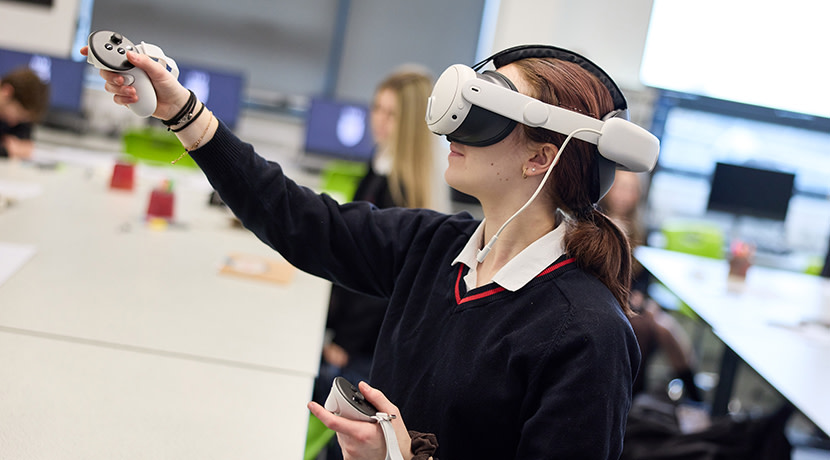
The residencies are part of a pilot programme testing how sculpture-led, cross-curricular learning can connect creativity, sustainability and emerging technologies such as AI, VR and 3D scanning.
Lucy Tomlins, Founding Director of Pangaea Sculptors’ Centre, said: “While sculpture provides the anchor, the programme integrates technical, digital, environmental and civic learning, offering an inclusive and highly engaging model for a wide range of learners. The 3D–5D programme is being developed with schools, not for schools. By working closely with teachers, pupils and industry partners during this pilot phase, we are able to test what works in real school settings; how artists and teachers collaborate most effectively; which skills and approaches have the greatest impact; and how traditional making and digital technologies can be integrated meaningfully.”
Rather than delivering stand-alone workshops, pupils work collaboratively towards a shared outcome, guided by professional artists and supported by teachers. Learning is embedded in real processes of enquiry, making, testing and reflection, mirroring how artists, designers and engineers work in the world beyond school.
At Keresley Grange Primary School artist Joanne Masding is working with Year 5 and 6 pupils exploring Coventry’s heritage as a place of brick making. The group is exploring how sculptural interventions in the fabric of our environments, such as the walls and pathways at the entrance of the school, can change the way we feel. In the weekly experiments using clay, mold making and making with paper, the project celebrates the students' global heritages, using the face of a brick as a place to express who we are, where we've come from and hopes for the future. Students are each making a fired clay brick prototype with coloured clay patterns and stamped text that tells us about the person who made it.
Year 4 pupils at Camp Hill Primary School are working with artist Spencer Jenkins to explore how to design public art and how it’s made. Using their own bodies as a starting point they are working with a range of materials to make models and work digitally to design an abstract sculpture.
Lucy Mebarki is working with pupils at Coundon Court School to explore the overlooked objects in everyday life. Students begin by drawing and modelling personal objects in clay, before visiting Compton Verney to explore contemporary sculpture. They then use 3D scanning and digital tools to reimagine their objects as potential public artworks, developing proposals that respond to their school environment. The project shows how sculpture can be a powerful way to connect personal stories with shared spaces.
Learning from this phase will directly inform the final programme structure, resources and delivery models for national rollout, with the full 3D–5D schools programme launching nationally in April 2026.
Along with funding from Innovate UK and support from Futures Trust, the pilot programme is further supported by industry collaborators including Shining3D, Penta Patterns, Marchant Cain, and a wider ecosystem of universities and education specialists.
Find out more about A 3D–5D Learning Revolution: Sculpture as a Tool for Wider Learning via: pangaeasculptorscentre.com