
More Theatre News
-
RSC releases rehearsal images for Middlemarch
Posted on Thu 03 Sep
-

Birmingham hosts major black arts showcase in celebration of Black History Month
Posted on Tue 01 Sep
-
Albany Theatre launches free theatre masterclasses with homegrown star
Posted on Thu 27 Aug

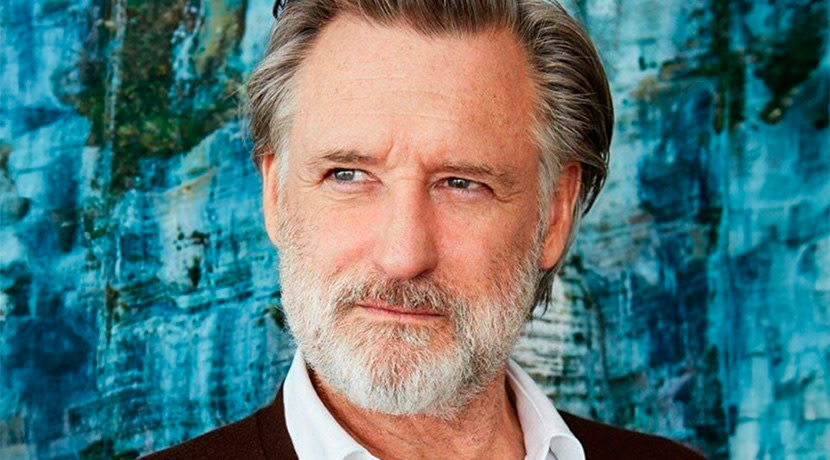
Hollywood film actor Bill Pullman talks about making his RSC debut in a new all-star version of The Cherry Orchard...
Bill Pullman is one of three movie stars - alongside Sir Kenneth Branagh and Helen Hunt - appearing in a new version of The Cherry Orchard at the Royal Shakespeare Company’s Swan Theatre this summer. The Hollywood veteran tells What’s On about his first visit to the RSC - back in the 1970s - his love of trees, and how his apparent ‘guest star’ role in the production came about...
The region’s hottest theatre ticket this year is undoubtedly the Royal Shakespeare Company’s (RSC) new production of Anton Chekhov’s The Cherry Orchard, which boasts three bona fide Hollywood A-listers among its cast. Tickets for the show sold out almost instantly, such was the pulling power of its initially announced stars Sir Kenneth Branagh and Helen Hunt - only for fellow movie legend Bill Pullman to be added to the 28-strong ensemble a few weeks later.
Probably best known for playing the US president in 1996 blockbuster Independence Day, the actor’s extensive CV also includes the likes of Spaceballs (and its upcoming sequel), The Accidental Tourist, Sleepless In Seattle and Lost Highway. More recently he’s taken the lead role in four seasons of Netflix’s The Sinner and also appeared in The Boroughs.
Wrapping work on another project contributed to initial confusion over whether he’d officially signed up for the RSC role, but the unintentional delay also had a few upsides. Not only did it suggest he was the show’s guest star - as well as a bonus for those who had already booked tickets - but he says being unveiled after the fact suits him just fine.
“I got no pressure!” laughs the amiable 72-year-old, who hails from upstate New York but now lives in Los Angeles. Given how age-defying he looks and sounds, the California lifestyle evidently agrees with him.
“Tickets were sold out. It wasn’t like I was brought in to add five more people on the bus or something.”
It turns out the delay was purely down to communication issues (“I thought it was a slam dunk”), since he was never going to pass up the chance to perform at a venue he’d made a pilgrimage to while a college student in the early 1970s. Was visiting the theatre a big deal for a fledgling American thespian?
“That’s a good question, because there are a number of actors that probably don’t have it on their radar like I did,” he says, attributing his interest to “a little bit of propaganda the RSC put out in the 60s”.
“I was in high school, and there was a substitute teacher who didn’t know what to teach,” he explains.
“She’d come across a 16mm film that the UK government funded about Christopher Plummer as a young actor in Stratford-upon-Avon, riding his bike to work. It was totally out of context, but it dripped into my DNA what a beautiful thing to be an actor and riding around on a bicycle. And then to come here, it was like Mecca - it didn’t disappoint.”
That initial visit afforded Bill the chance to take in a matinee performance of Macbeth - as well as sample one of the local delicacies...
“I got some fish & chips to eat on the coach on the way back,” he recalls, whimsically. “They were about the best I ever had. I think that was the last time I had chips wrapped in newspaper.”
We’ve moved on from doing that now, I tell him.
“That’s too bad - there might have been a little flavour in the ink.”
Taste is a sense the actor relies on more than most, having lost the ability to smell over 50 years ago following an accident when he fell from the shoulders of another actor during rehearsals for a play.
“I was in a coma for two and a half days, and when I came out, I didn’t have a sense of smell,” he says matter-of-factly. He’s attempted to get it back without success, but says the condition (“it’s called anosmia”) has almost certainly heightened his sense of taste.
“When I first went to California, I was walking down the street with an actor friend and there was this orange tree. I’d never seen one before, so we had tree-ripened fruit there and then. I couldn’t smell it, but the taste was so perfect.
“The first taste of tree-ripened fruit is a whole different experience to the ones that get shipped, so I had to have trees that I could watch and see if I could beat the squirrels to the fruit.”
The fascination didn’t stop there. For the last 15 years, he and wife Tamara have run Hollywood Orchard, a non-profit organisation that harvests, uses and donates locally grown fruit to needy families, working with food charities and hosting workshops and pop-up kitchen events.
He also co-owns a ranch in Montana with his brother where he gets to spend time outdoors and escape the day job - although he admits it can make it hard to return.
“Sometimes it's a little scary because you get your head into that world and then you come [back] into this one… you’ve really got to be able to compartmentalise.”
His role on the farm primarily seems to involve making repairs (“we have fires that wipe out fences”) and chopping down and clearing dead trees - which brings us nicely back on point, and the play we’re here to talk about. It turns out he’s had “a very serious engagement with orchards” virtually his entire life.
“They’ve had mystical levels of attraction for me. I remember taking an acting class and they asked us to bring in a book that was important to us and do prop work with it. I brought Fruits For The Home Garden.”
The actor’s affection for the genuine article seems clear, but what about Chekhov’s Cherry Orchard?
“[It’s] a play I read in college and did a scene from, but I didn’t really relate to the younger characters at the time. Now I’ve aged a bit, it’s like ‘Oh my God, I get it.’”
The battle for a prized estate - and its titular fruit trees - depicted in Chekhov’s final play is effectively a commentary on the class struggles that beset the Russian Empire around the time of the Russian Revolution, but the allegory has a contemporary resonance too. Bill remains fairly tight-lipped about the new version (by Olivier Award-winning playwright Laura Wade) save for a cryptic reference to a letter he received from director Tamara Harvey when she first offered him the role.
“The content of it was so interesting to me, and the way she thought about the character of Gaev. When I looked at the script, I could feel exactly what she had kind of baited me with.”
There are clearly parallels to be drawn with modern society and divisive contemporary politics, as well as an environmental message (“they weren’t good stewards of the land”), but Bill is just as keen to focus on the manic family dynamic and the characters’ total lack of morals as they debate what to do in the face of spiralling debts.
“They don’t really know how to behave, and the corruption is eating away at them. There’s something really brilliant about the human mind that can live quite blissfully with denial.”
He also believes the play - which he’s quick to point out is as much fun as it is intellectually stimulating - provides a fascinating prism through which to view the trials and tribulations of the human condition.
“Denial is more than a river in Egypt,” he jokes. “They can go from deep despair to high mayhem in an instant, just because of the need to escape the truth. It’s passionate and emotional… and insane.”
The Cherry Orchard shows at The Swan Theatre, Stratford-upon-Avon, from Friday 10 July to Saturday 29 August
By Steve Adams