
More Visual Arts News
-
Wolverhampton Art Gallery to host major exhibition by British artist Permindar Kaur
Posted on Thu 23 Jul
-

Feature: What's New
Posted on Wed 22 Jul
-
A world of possibility at the Herbert
Posted on Tue 07 Jul

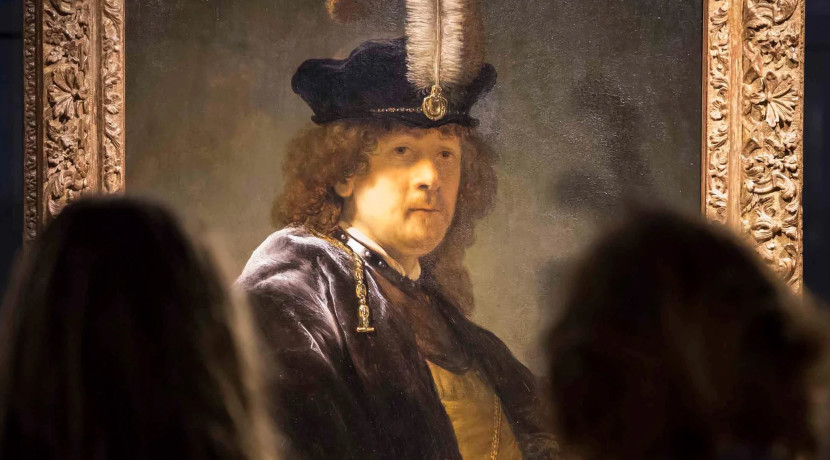
The National Trust invites visitors to slow down and reconnect - with themselves and with art - through a year-long nationwide tour of one of its most celebrated paintings: Self-portrait wearing a Feathered Bonnet by Rembrandt van Rijn.
As part of the initiative to encourage new ways of engaging with paintings, it is expected that visitors will discover the mental health benefits of 'slow looking' at art, which include helping deal with the demands of a busy world.
The painting arrived at Upton House in Warwickshire on Friday 17 July, remaining there until Sunday 8 November. It will then return to its home, Buckland Abbey in Devon.
Several recent studies have shown that exploring art and heritage has the potential to improve people’s mental health. The benefits can include helping to escape the mental trappings of day-to-day living, reduce stress, foster emotional resilience, and even spark feelings of inspiration and enlightenment.
While the mental health benefits of being in nature are widely known, the National Trust is encouraging people to discover how art and heritage can offer similar restorative effects.
The average museum or gallery visitor spends just eight seconds looking at each artwork. The Trust is challenging that norm by offering seating and audio guides with meditative prompts that encourage viewers to linger with Rembrandt’s masterpiece. The painting will be shown with room to allow people to focus on the work on its own, allowing space for uninterrupted contemplation.
The painting itself has a remarkable story. Once thought to be the work of a follower, it was reattributed to Rembrandt himself after extensive conservation and scientific analysis in 2013. It is now recognised as one of the great treasures of the National Trust’s collection.
Rembrandt created around 80 self-portraits throughout his career, each giving a different insight into his character. In this picture he cuts a swaggering figure, with hand on hip, elaborate costume and hat. But there is also something tentative about the way he looks back at the viewer, and shadow across his face gives a mysterious feel.
Visitors will have the option to explore the painting’s history through audio guides featuring insights from conservators, art historians, and even imagined reflections from Rembrandt himself, or to simply sit quietly and enjoy spending time with a masterpiece of Dutch art.
Marking the final stop of its tour, the painting will be displayed at the historic Upton House in the Midlands, a country house celebrated for its remarkable art collection and rich cultural legacy. Visitors will have the opportunity not only to experience ‘Meet Rembrandt’, but also to discover the many significant permanent artworks housed within Upton’s internationally important collection.
‘Meet Rembrandt’ will be held in the Sitting Room on the ground floor of the House. Step-free access is available via a ramped side entrance. Visitors requiring assistance may speak with a member of staff at the main house entrance, who will be able to facilitate access.
Normal admission applies, no pre-booking required. Tickets for the Meet Rembrandt experience are on a first come first served basis. For more information visit the website.
Image © National Trust Images/Chris Lacey