
More Visual Arts News
-
'Meet Rembrandt' at Upton House and Gardens
Posted on Thu 23 Jul
-
Wolverhampton Art Gallery to host major exhibition by British artist Permindar Kaur
Posted on Thu 23 Jul
-

Feature: What's New
Posted on Wed 22 Jul

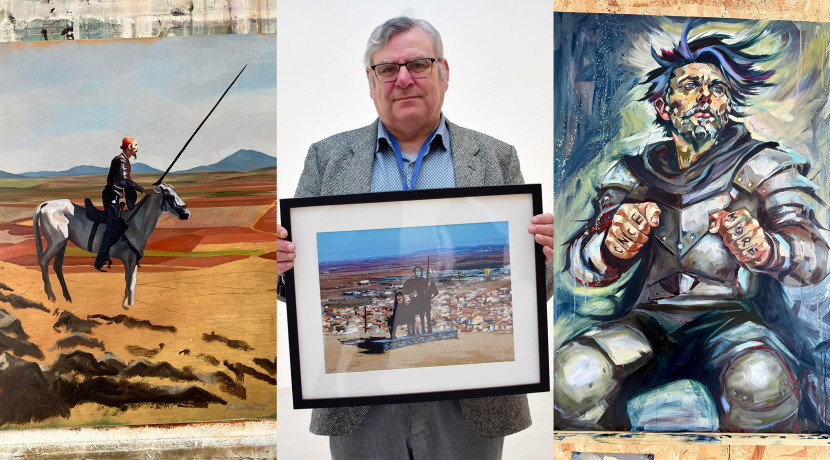
An ambitious new group exhibition at The Core in Solihull brings together contemporary artists responding to Miguel de Cervantes’ literary masterpiece Don Quixote de la Mancha.
Titled Tilting at Windmills, the exhibition was conceived and curated by Tom Ranahan, initially inspired by the dramatic engravings of Gustave Doré from a nineteenth century illustrated edition of the novel. From this starting point, selected artists were invited to embark on a visual exploration of Cervantes’ enduring themes.
First published in the early seventeenth century, Don Quixote remains strikingly relevant today. Its exploration of illusion and reality, idealism and absurdity, morality in a cynical world, and the fragile boundary between heroism and folly continues to resonate across cultures and generations.
Working across painting, drawing and sculpture, the participating artists interpret these themes through their own distinctive visual languages. Some respond directly to Cervantes’ narrative, while others draw from the psychological undercurrents of the text, examining delusion, resilience, imagination and the persistence of belief in an uncertain age.
The exhibition invites viewers to reconsider the meaning of the familiar phrase “tilting at windmills”. Far from a futile gesture, it becomes a symbol of conviction, creative risk and the refusal to surrender one’s ideals.
Tilting at Windmills offers a timely reminder that great literature continues to inspire new conversations across disciplines, and that the dialogue between image and text remains as powerful today as it was four centuries ago.
More information can be found here.