
More Theatre News
-

Feature: Disney at the double with a theatre break in the capital
Posted on Fri 10 Apr
-

Feature: Barnum comes to Birmingham Hippodrome
Posted on Fri 10 Apr
-

Review: Good Golly Miss Molly
Posted on Fri 10 Apr

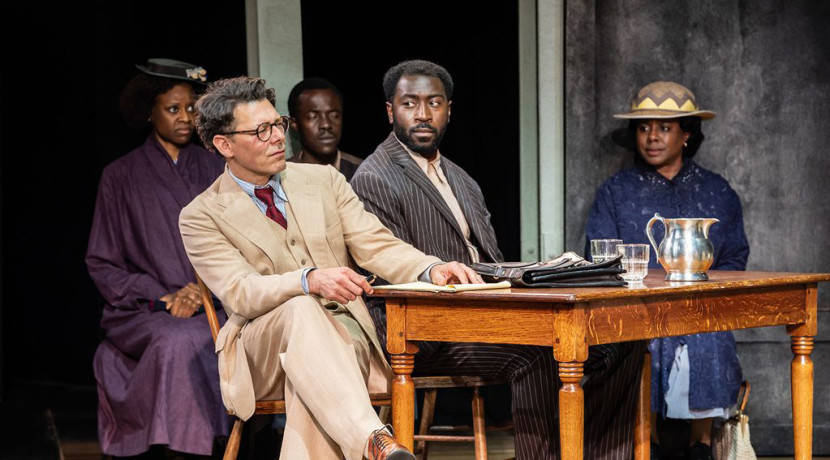
The big draw for this much lauded stage version of Harper Lee’s Pulitzer Prize-winning novel is very much the adapter: Aaron Sorkin. The man feted for writing TV drama The West Wing (as well as movies A Few Good Men, Enemy Of The State, Moneyball and The Social Network, among others) seemed a perfect fit to breathe new life into the story of racial injustice in the deep south of the 1930s from the outset, and eight Tony Awards more than proved the point.
A huge hit on Broadway and then the West End, this touring version retains a good chunk of the most recent London cast, including Patrick O’Kane as Atticus Finch, the idealistic lawyer at the heart of the tale, and Anna Munden as his smart but awkward daughter Scout. The former is a morally upstanding attorney (although subsequently identified as a racist in Lee’s 2015 follow-up novel Go Set A Watchman), defending a black man accused of raping a white woman, the latter a sassy tomboy who also serves as narrator, explainer and fundamental conscience of the piece.
The story is largely told through the eyes of children - Scout, her brother Jem and friend Dill - and oscillates between memories of an exuberant Alabama summer and high-octane courtroom drama. In Sorkin’s version the youngsters frequently address the audience, providing commentary to help move the plot along as well as an innocence that contrasts with the harsh reality of what’s going on around them.
And boy is it harsh. I can’t have been alone in taking a breath at the level of racist language and bigoted attitudes on display - in keeping with Lee’s original, but horrific to be confronted with all the same – even if it arguably dialled the pacy drama’s power up a couple of notches.
Not that it needed it, such was the all-round excellence of this virtually flawless production, from director Bartlett Sher’s subtle scene changes to Miriam Buether’s dynamic set changes that allowed the action to flit between the Finch family home and cold grey courtroom almost as snappily as the quick-fire dialogue (very much a West Wing trait) delivered by a uniformly magnificent cast. The ensemble's performances were superb across the board, and while Coyle and Munden will get, and deserve, the greatest plaudits, special mentions also go to Andrea Davy (a steely Calpurnia, the housemaid given greater credence in this adaptation), Dylan Malyn (a heartbreakingly innocent Dill), Oscar Pearce (ragingly malevolent as the abusive Bob Ewell) and Evie Hargreaves (painfully believable as his broken and bitter daughter Mayella).
Every element combines to serve Sorkin’s blistering and discreetly modernised (Finch is more conflicted and is ‘white saviour’ status less glaring) take on Lee’s hard-hitting original, which might be set almost 100 years ago but sadly retains a contemporary resonance, whether that’s the rise of Far-Right politics, mob mentality (“a person is smart, people are dumb” notes Finch) or the basic importance of respect and morals - and when to ignore them.
The verdict? An extraordinary and utterly absorbing piece of work and one of the best things I’ve seen in a theatre for a long time. Catch it if you can.
Five stars
Reviewed by Steve Adams at Birmingham Hippodrome on Tuesday 14 April. To Kill A Mockingbird continues at the venue until 18 April.